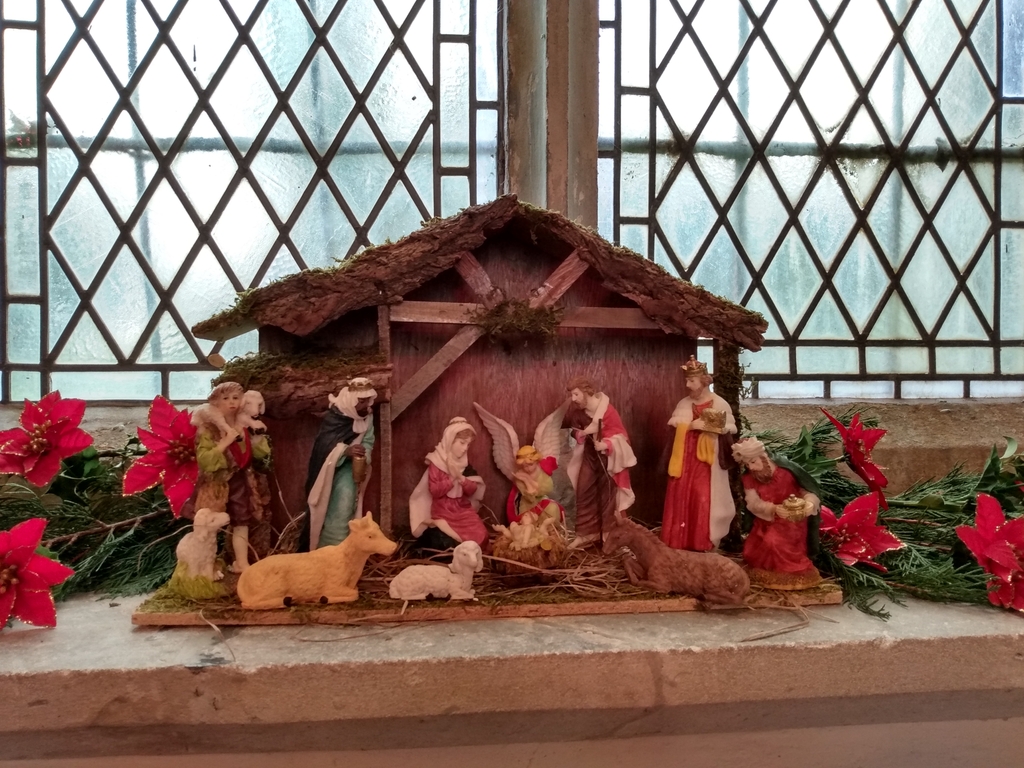
The Revd Writes… “Come butler, come fill us a bowl of the best Then we hope that your soul in heaven may rest But if you do draw us a bowl of the small Then down shall go butler, bowl and all.” For many, January dawns and with it the relief that Christmas is over. Christmas decorations and lights, which seem to go up earlier each year - reflecting perhaps more the advent theme of light amidst darkness than nativity – are quickly taken down and put away. There disappearance taking with them the strains and stresses of Christmas shopping, unwanted gifts, and the complexity of strained family gatherings, are warmed by the longing for a return to a more predictable normality. Yet the cold of winter and the ‘back to normal’ leaves some of us missing the festive glow of a more sociable time, and the opportunity to lose oneself in the gaiety of the season now passed. ‘Blue Monday’ (19th January) the day in many mental health calendars highlighted to be the most depressing day of the year (a bit of a myth), focuses attention on the challenges of what it means to keep one’s mind healthy. The increase in daylight hours, though helpful, still make this easier said than done. Amidst the shadows, spring feels a long way off. The seventh verse of the Gloucester Wassail, an C18th Christmas Carol, gives warning that we need each other if our bowls are to be filled of the best. 2026 and the weathering of the storms of ‘here we go again’, both physical and mental in different guises, require the renewing of the commitment to generous and constant hearts - sensitive and empathic to the needs of each other and to the needs of ourselves - exercise, eat well, drink sensibly, talk to someone who understands. In the Christian calendar the 25th of December is but the beginning of a season. Far from taking down decorations our churches remain decked in white and gold, and the nativity scenes are only put away at Candlemas – 2nd February. Enough time to remind ourselves of the Christmas gift that God walks alongside, before the spring bulbs and the promise of new life begin to emerge. God Bless Mark
The Revd Writes… The wisemen set off from Benington. The journey would be long and hard. The lanes were treacherous at this time of year. Flooding was an ever-present threat, the mud underfoot slippery. Good wellies and a stout walking stick to help with balance were necessary. A hat, scarf and gloves gave some protection from the freezing wind and rain. In the dark one could easily lose one’s way. One of the wisemen had a map, another a compass and the third, a small flask of brandy. The latter for purely medicinal purposes - including keeping the chill out of the bones. Wisemen indeed. The Shepherds set off from Ardeley – Wood End to be precise. Like the sheep in the fields around, they were well wrapped in woollen fabric. Heavy overcoats to keep out the elements. They make people tough in this part of the world. Plain speaking and straight-forward, the Shepherds agreed to cut across the fields, following the tracks made by deer and badger. An owl hooted as they set off and could occasionally be heard all along their journey. A star appeared above Cottered. Both wisemen and shepherds noticed its rising in the northeast. There were pilgrims, from Throcking, heading south down the valley, and though the light from the star was sometimes shrouded in the cloud (and the rain), its light was sufficient to guide them across the stiles and over the footbridge that crossed the winterbourne. Eventually, the wisemen, and the shepherds, and the pilgrims, all gathered in Walkern. The star seemed to settle over the White Lion pub where there was much jollification taking place. A new family had recently moved into the village – a young couple with a baby. Everyone was celebrating the new arrival. One shepherd offered a woollen shawl as a gift for the baby. “New life brings hope, and hope keeps us warm,” he said, smiling at the young mum as she wrapped her baby in its new comfort blanket. “The best thing about this time of year,” said Harry, one of the wisemen, “is that it brings us all together. It might only be once a year but look here, we’ve got people from all the villages around.” “God works in wonderous and mysterious ways,” said an elderly lady from Throcking. “And there’s nothing like a brand-new baby to remind us all that life goes on despite everything else going on in the world.” “Let’s toast the new baby,” said Dave, the publican. “Here’s to new life, new hope and our all being together.” And everyone gave a hearty shout, “Cheers!” Happy Christmas God Bless Mark
The Revd Writes… Many years ago, I was working in a psychiatric hospital, caring for patients being assessed for varying stages of dementia. The heartbreak for relatives, and for staff, of watching someone who had lived a full and vibrant life being slowly reduced to becoming dependent upon others for basic needs being met was a daily reminder of how fragile and vulnerable life is at its core. We come into the world being dependent upon others and for so many, often blessed with a long life, we leave the world in the same state. Being dependent upon others for caring for our bodily needs brings its challenges and equally, if not more so, are the demands of caring for sick and poorly minds. At times, surrounded by thirty confused adults, it was difficult to remember the lives once lived, the contributions to society once made, the capacity for loving and nurturing once given and shared. Relatives were asked to share a photograph of patients in the prime of their lives as a way of reminding staff of who the person they were caring for used to be. Leading trade unionists, military officers, academics and even a psychiatric nurse, who had once worked on the ward, adorned bedside cabinets. Many hours were spent with patients reminiscing about the ‘good old days’ in attempts to hold and recall vestiges of a distant life. Sadly, for many, this proved too much as the slow creep of frailty robbed minds of the ability to relate to anything beyond a few minutes, or even seconds. Occasionally there would be moments when, from deep within an almost abandoned consciousness, a stirring of awareness occurred, taking staff by surprise. I remember Mr Judd. Lost in a quagmire of confusion, unable to speak, with little facial expression, tears rolled down his cheeks on hearing the Last Post being broadcast from the Cenotaph. Inexplicably, he muttered one word, “terrible…” It was as if he was somehow managing to speak for others, who could no longer articulate, the pain of war, and sorrow for the Fallen. In a world of confusion, with its competing demands and narratives, and in which the self-absorbed often seems to dominate so much of life, there remains a collective responsibility to remember those who have sacrificed themselves for the basic freedoms that we so often take for granted. Those who gave their lives and who have lost the ability to speak, ask that we speak for them, and in doing so to remember the “terrible” cost, not just for the victims of past conflicts but for those who continue to pay the price of war in our own day. God Bless Mark
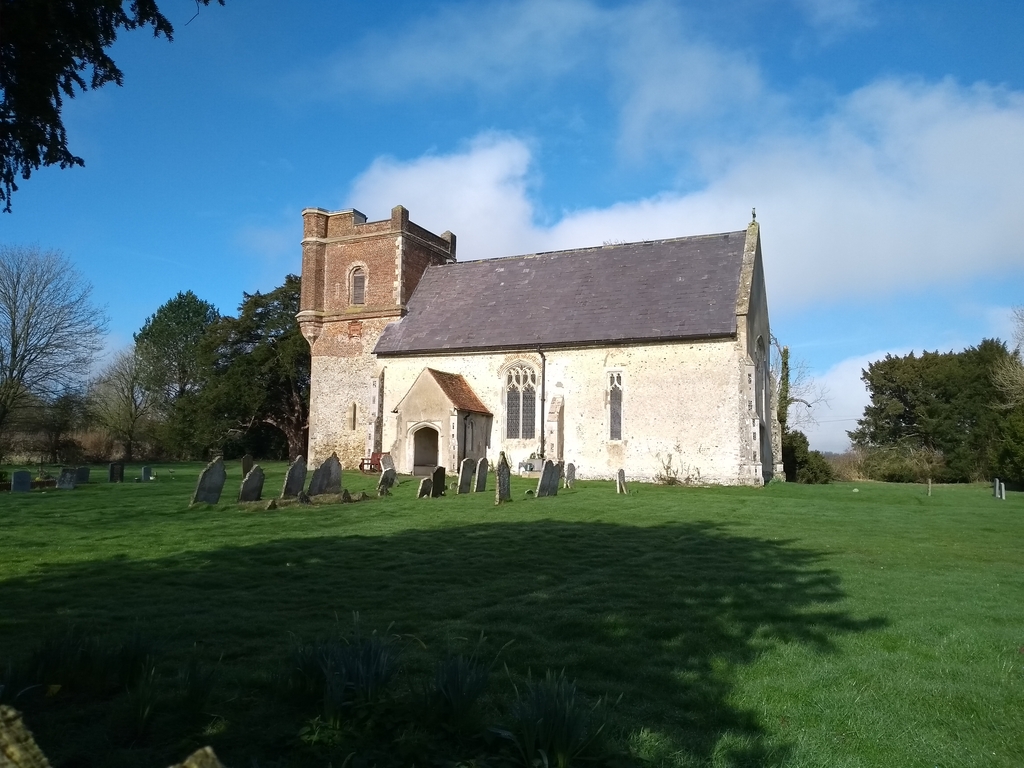
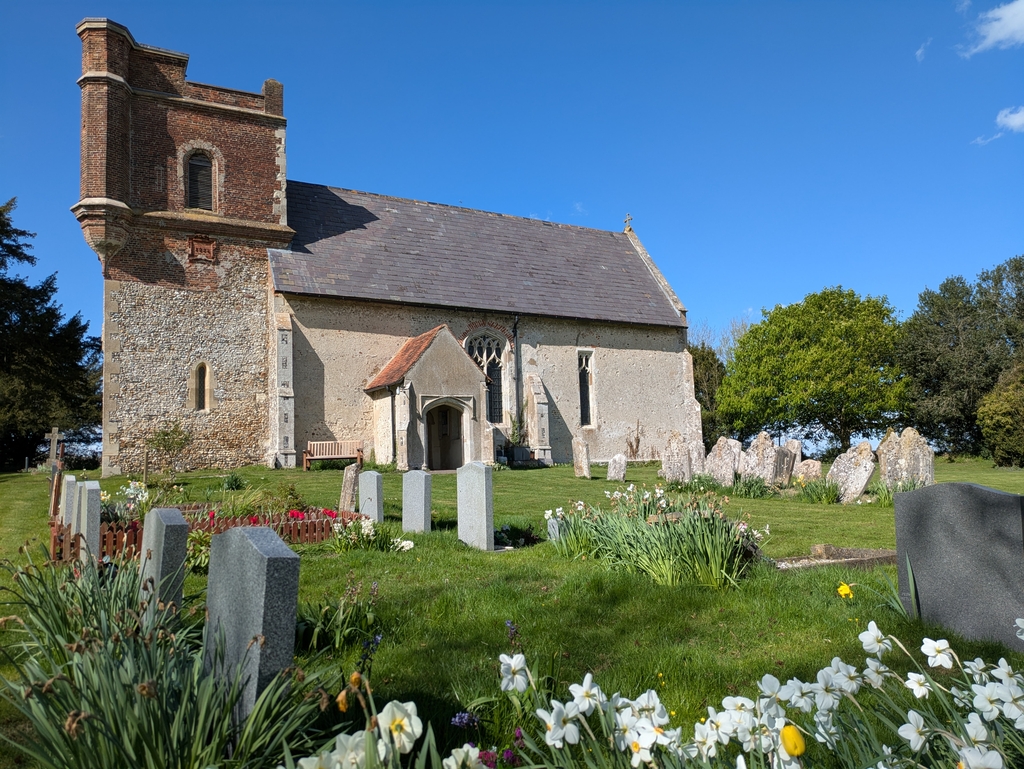
The Revd Writes… One of the surprising features of Summer 2025 was the appearance on our streets and road network of national flags, both the Union Jack and the Cross of St George. I for one have been an admirer of other countries where the national flag is flown in gardens and alongside front doors, as well as public buildings and spaces, as a mark of patriotic pride and identity. Earlier in the year I came across a lone homestead in the middle of nowhere in the heart of Sweden, the only splash of colour in an otherwise bleak landscape was the yellow and blue of the national flag, fluttering proud and true. It was cheering. National flags have long been used as symbols around which to unite a country. Both the Union Jack and the Cross of St George speak, without the need for words, about who we are as a people and the common values and culture we share. The courage to stand up against evil, depicted in St George slaying the dragon, and the coming together of the peoples of the disparate British Islands, expressed in the design of the Union flag, both emphasise that, overall, we remain better together than apart. Symbols are, of course, subject to interpretation. Some will want to accentuate a particular angle or value. Which particular value does the flag represent for you? Duty? Loyalty? Sacrifice? English or British first? Whatever your response and however you feel, what is true, is that, as a symbol, a national flag is not owned by any one group in society. No political group or party can claim exclusive rights over its use or interpretation. The national flag is owned by everyone and no one group has the right to sully its reputation in such a way as to leave others feeling that they don’t belong. To do so is to deny the rightful place of the flag in helping to generate community cohesion. Flags have flown from the top of church towers and in churchyards ever since anyone can remember. In the fourth century the Roman Emperor, Constantine introduced the red cross on a white background to symbolise the resurrection of Christ; the triumph of life over death. The Swiss businessman, Henry Dunant, chose the same symbol when founding the Red Cross Society after witnessing the suffering of soldiers and others at the Battle of Solferino in 1859. In the same vein, our national flags are there to promote and encourage the best of who we are and what we can be as a people, united in purpose, affirming the common good, looking out for each other. God Bless Mark